
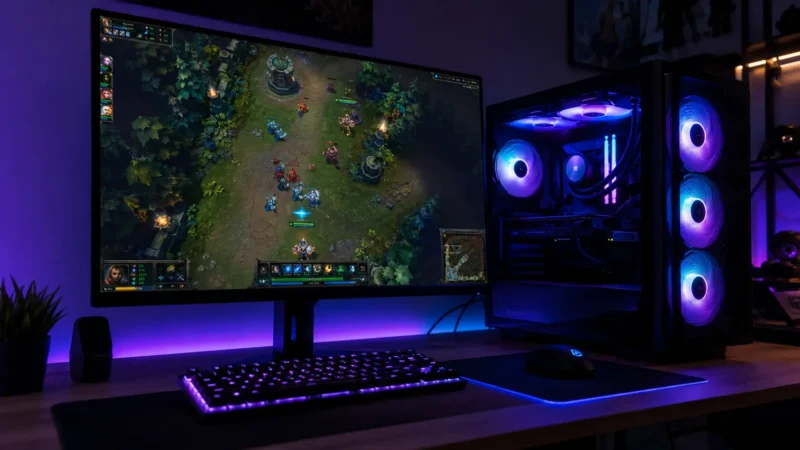
Riot Games launched League of Legends Classic on 29 July 2026. It is a classic mode rebuild that runs inside the existing client and competes for the same players as modern League. Riot is hardly the first company to try this. Old School RuneScape, World of Warcraft Classic, Fortnite OG, Overwatch Classic and EverQuest progression servers have all followed the same idea.
When a live-service game runs for a decade, it stops being the game many people originally fell in love with. Mechanics change, systems pile up and whole parts of the game disappear. Eventually the older version starts to feel like a separate product with its own audience.
Publishers have also realised who that audience is. Many of the people asking for old versions are now in their thirties or forties, have full-time jobs and are happy to spend money on a game they already remember fondly.
There is another side to it, though. A publisher-run Classic mode is not really preservation. You are renting access to an old version of the game, and the publisher can take it away again.
What is a “classic” mode in games?
A classic mode is an official recreation of an older version of a live game. The original publisher runs it, usually inside the current client or alongside it. Old mechanics, balance and interface return, but the code underneath is often rebuilt or adapted for modern infrastructure.
People use the word “classic” for several different things, so it helps to separate them:
| Type | What it actually is | Examples |
|---|---|---|
| Classic mode | Old build re-created inside the modern client | League Classic, Fortnite OG, Overwatch Classic |
| Legacy server | Separate official servers running an old version | Old School RuneScape, WoW Classic, EverQuest progression servers |
| Remaster | Same game, upgraded presentation | StarCraft: Remastered, Age of Empires II: Definitive Edition, Diablo II: Resurrected |
| Remake | Rebuilt from scratch, new engine | Gothic 1 Remake, Resident Evil 2 (2019) |
| Community preservation | Fan servers, source ports, DRM-free reissues | Project 1999, DOSBox, OpenTTD, GOG builds |
Only the last one can survive without the publisher deciding to keep it alive. It is also the category that got there first: in almost every case below, fan communities had already rebuilt and hosted the old version years before the publisher decided to sell it back to them.
A short timeline of the classic-mode trend
The idea has been around longer than it may seem. At first, companies treated old-version servers more like a concession to stubborn fans than a proper product strategy.
- 2011: EverQuest progression servers. Sony Online Entertainment opens Fippy Darkpaw, rolling players back to the 1999 ruleset and unlocking expansions on a schedule. The fan-run Project 1999 had already shown that people wanted this.
- 2013: Old School RuneScape. Jagex restores a 2007 backup of RuneScape after a player poll. It was supposed to be a side option for a vocal minority. Instead, it became the main attraction.
- 2016: Nostalrius. Blizzard shuts down a popular fan-run vanilla WoW server. The closure triggers a huge backlash and a petition with hundreds of thousands of signatures. The pressure is widely credited with pushing Blizzard toward an official solution.
- 2019: World of Warcraft Classic. Blizzard releases the version of WoW it had spent years saying players did not really want. It later grows into Hardcore mode, Season of Discovery and a sequence of Burning Crusade, Wrath, Cataclysm and Mists re-releases.
- 2023: Fortnite OG. Epic brings back the Chapter 1 island for a month.
- 2024: Fortnite OG becomes permanent, while Overwatch Classic brings back the original 6v6 version of Overwatch as a limited event.
- 2026: League of Legends Classic. Riot rebuilds Season 3 with the old runes, masteries, Influence Points and the black-and-green Adobe AIR client aesthetic.
In thirteen years, several of the biggest live-service games in the world have ended up looking backwards.
Reason one: the audience grew up and got a salary
This is probably the biggest reason, even though it does not get discussed as much as nostalgia itself.
Someone who played vanilla WoW in 2004, RuneScape in 2007 or Season 3 League in 2013 may now be in their thirties or forties. According to the ESA’s 2026 figures, the average American player is 37, compared with 29 in 2004. Adult players are also more likely than the general population to work full time.
That changes the business case for an old version of a game.
- The audience has disposable income now. A 34-year-old with a job may buy a £10 pass without thinking much about it. A 15-year-old often has to ask a parent first.
- Adults usually have less free time. Older builds can feel easier to return to because they do not come with ten years of new systems, seasonal mechanics and meta knowledge to learn.
- Nostalgia itself has value. A cosmetic based on an old loading screen or interface can be cheap to make and still mean a lot to someone who remembers it.
- Old accounts are easy to reactivate. A former player may already have years of history attached to an account and needs very little convincing to log in again.
The teenagers who used to hit RuneScape’s membership paywall now have their own cards. Publishers know that, and the timing of the classic-mode boom is not a coincidence.
Reason two: the modern version genuinely became a bigger game
People often say that modern games are too complicated, and sometimes that just means they got older and stopped keeping up. Live-service games are a little different because the amount of stuff inside them really does grow over time.
League of Legends launched in October 2009 with 40 champions. By mid-2026 it has 173. League Classic launched with 60, covering the original 40 plus twenty champions released before the end of 2013. Riot has said the roster stops before Yasuo, whose design philosophy marks the break point.
The rest of the game has grown in the same way:
| 2013 League | 2026 League | |
| Champions | ~110 released, ~60 in Classic’s scope | 173 |
| Pre-game systems | Runes + Masteries (bought and configured before queue) | Modern rune trees, role quests, expanded item slots |
| Client | Adobe AIR, one screen | Modern client with multiple products inside it |
A returning player has to recognise far more characters, items and systems than they did a decade ago. That is simply more information to learn before the game starts to feel familiar again.
Riot game designer David “Phreak” Turley described modern League as <cite index=”33-1″>an action game with a lot of strategy involved</cite>. Classic shifts that balance back toward the older style.
Other live-service games went through the same kind of growth. WoW repeatedly added and replaced talent systems, borrowed-power mechanics and expansion-specific features. Fortnite added a huge building skill ceiling, ranked play, LEGO, racing, festival modes and a constant stream of licensed crossovers. Overwatch even changed its basic team size.
If someone returns after eight or ten years, they are often coming back to a game that shares the same name but feels very different from the one they remember.
Reason three: it is the cheapest content in the industry
Classic modes also make a lot of sense from the publisher’s side because much of the expensive work has already been done.
- The assets already exist. The maps, models, sounds and interface are already sitting somewhere in version control.
- The design has already been tested by real players. There is no need to guess whether people liked the basic idea. They played it for years.
- The characters and world already have an audience. Marketing does not need to introduce a new IP from zero.
- Old players can come back cheaply. Reactivating an existing account usually costs less than finding a completely new customer.
- The old version can have its own monetisation. League Classic has its own store, currency, Classic Pass, progression and cosmetics.
- Fan demand becomes something the publisher can sell directly. A community server used to be a legal headache. An official Classic mode turns the same demand into revenue.
The last point becomes awkward when fan projects are involved.
One of the developers credited on League Classic previously worked on Chronoshift, a fan-made old-League project. Riot shut Chronoshift down. Years later, the company hired someone who had worked on it and released its own official Classic mode.
Does it actually work? What the numbers say
At launch, yes.
- Fortnite OG produced the biggest day in Fortnite’s history: 44.7 million players and about 102 million hours played in 24 hours, with a then-record 6.1 million concurrent players in November 2023.
- Old School RuneScape eventually overtook the version it was supposed to sit beside. RuneScape 3 is near all-time-low territory in 2026, while OSRS remains one of the most-played MMOs in the world. Many players who left after the 2012 combat rework moved to OSRS in 2013 and never went back.
- WoW Classic created server queues Blizzard had not seen since the game’s original peak and later grew into a parallel line of WoW products.
There is one problem when comparing MMO numbers. Most third-party population trackers work from indirect signals, and their estimates can be wildly different. Unless a concurrent-player figure comes directly from the publisher, it is better treated as a rough indication than a precise measurement.
What classic modes get wrong
The launch numbers are impressive, but they never tell the whole story.
They can bring back the mechanics, but they cannot bring back the original playerbase. Part of what made League in 2013 fun was that most people were still figuring it out. Thirteen years of guides, theorycrafting and optimisation do not disappear when an old ruleset comes back. Riot has even withheld some match data such as win rates in Classic to slow down aggressive metagaming. That may help, but it cannot recreate a time when nobody knew the answers.
Nostalgia fades. These modes usually launch with a huge spike, lose a large part of that audience and then settle around a smaller group of regular players. That smaller group can still be big enough to justify the mode, but week-one numbers rarely last.
The playerbase gets split. Someone playing Classic is not queueing for the modern version. If enough people move between modes, matchmaking quality can suffer on both sides.
The game was only part of the memory. People also remember being nineteen, having fewer responsibilities, playing with friends every night and spending whole summers online. No Classic mode can bring that back.
Nostalgia mode is not preservation
League Classic is listed on the League of Legends Wiki as a Featured Game Mode. Dominion, Twisted Treeline, Ascension, Nexus Siege, Black Market Brawlers, Hunt of the Blood Moon, Dark Star: Singularity, Odyssey: Extraction and Invasion all sit in the same category.
Every one of those is now retired.
Riot has already shown that it is willing to remove entire maps and modes, even when players loved them. That means access to a Classic mode still depends on the company keeping it online.
In practical terms:
- It runs on the publisher’s servers.
- It stays online while the publisher considers it worth operating.
- Players cannot archive it, mod it or host it themselves.
- The version may mix elements from several periods instead of reproducing one exact patch. League Classic pulls from several seasons at once, so it is closer to a carefully assembled version of old League than a preserved historical build.
- Players can end up paying again for access to something they already played years ago.
Counter-Strike shows what can happen when the publisher controls the only live version. When Valve replaced CS:GO with CS2 in 2023, the game sitting in millions of Steam libraries simply changed.
Command & Conquer went in a different direction. EA released the source code alongside the remaster, which gave the modding community something it could continue using independently.
That is why the Stop Killing Games campaign matters more than the marketing cycle around one particular Classic mode. If a company can bring an old version back years later, the game clearly still exists in some usable form. The question is whether players will ever be allowed to keep access to it without depending on that company forever.
Why classic PC games never needed a “Classic mode”
This trend looks especially strange if you grew up playing PC games that were sold as complete products.
There is no “Deus Ex Classic.” There is no “Baldur’s Gate Classic,” no “Age of Empires II Classic,” no “Heroes of Might and Magic III Classic,” no “Total Annihilation Classic.” Gothic, Thief, System Shock 2, Diablo II, Max Payne, Quake, Unreal Tournament, Knights of Honor and Tzar: The Burden of the Crown do not need Classic modes either.
Nobody took the original versions away.
If you bought a PC game in 1998, the copy you owned stayed the copy you owned. A later balance patch could not permanently rewrite the disc on your shelf. A publisher could not remove one of its maps from that disc years later or replace the whole client with a different game. The disc, or the GOG installer today, still gives you that version.
Old games sometimes need help on modern Windows. DOSBox, ScummVM, source ports and community patches usually solve that problem, and you do not need a publisher to keep a live server running just to start the game.
Live-service games created a new kind of nostalgia problem because the game itself keeps moving. The version people remember may disappear even while the current game continues under the same name.
Classic modes give publishers a way to sell access to those older versions again. Traditional PC games never needed that solution because the old version never left your hands in the first place. The best classic mode is still a folder on a hard drive.
FAQ
What is a classic mode in a video game?
A classic mode is an officially operated re-creation of an older version of a live-service game, run by the publisher inside or alongside the current client. It restores older mechanics, balance and interface, but is a rebuild rather than the original code.