
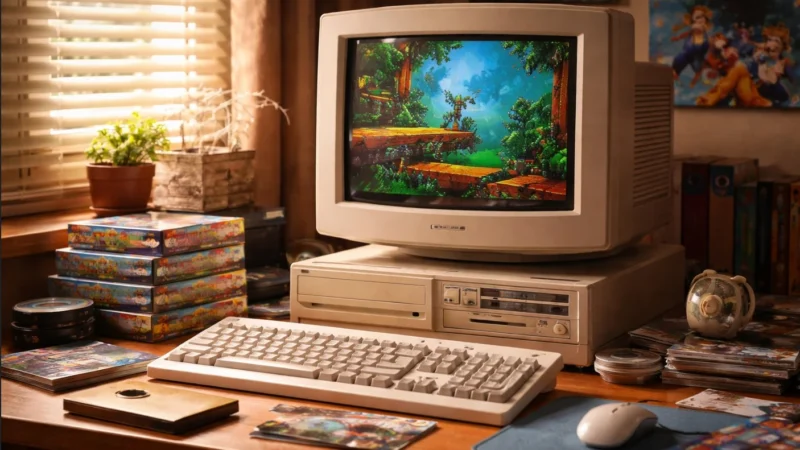
There was a time when a Disney game could sell itself in seconds. When you saw the box, you recognised the film immediately, and that was enough to make you interested in the game. That feeling is hard to explain to anyone who did not grow up with the 1990s and early 2000s.
These games lived on PC, Mega Drive, SNES, PlayStation, and a few other systems. Several had PC releases on CD-ROM, and if you want to revisit those, here’s how to run old PC game discs on Windows 11. Some were simple. Others were cruel. A few turned out far better than anyone expected from a film licence. That is the real reason people still remember them. They were not there only to follow a cinema release. The best ones had character, mood and levels that stayed in your head for years.
We have only discussed Aladdin at our 25 best classic PC games list, so I will not focus on it here.
Top 10 Disney games from the classic era
| Game | Year | Developer |
|---|---|---|
| Castle of Illusion Starring Mickey Mouse | 1990 | Sega |
| QuackShot Starring Donald Duck | 1991 | Sega |
| Aladdin | 1993 | Virgin Games USA |
| The Lion King | 1994 | Westwood Studios |
| The Jungle Book | 1994 | Eurocom |
| Mickey Mania | 1994 | Traveller’s Tales |
| Timon & Pumbaa’s Jungle Games | 1995 | 7th Level |
| Disney’s Hercules | 1997 | Eurocom |
| Disney’s Tarzan | 1999 | Eurocom |
| Toy Story 2 Buzz Lightyear to the Rescue | 1999 | Traveller’s Tales |
These ten games cover the period when Disney had a real presence in gaming. Some were built around huge films. Some earned their place more slowly. Together, they show why Disney games still carry so much nostalgic weight.
Castle of Illusion Starring Mickey Mouse
- Released 1990.
- Developer Sega.
- Genre Platformer.
- Original draw Bright fantasy worlds and clean level design.
Released in 1990, Castle of Illusion helped set the tone for Disney games on console. It was simple in the best way. The controls were easy to understand. The levels were varied. Mickey was a perfect fit for that kind of adventure. The game still matters because it showed that a Disney title could be polished, charming, and worth taking seriously as a platformer.
QuackShot Starring Donald Duck
- Released 1991.
- Developer Sega.
- Genre Platform adventure with puzzle elements.
- Main appeal A more adventurous role for Donald Duck.
QuackShot always stood out because it felt a little different. It was not built around pure speed. It gave players more of an adventure mood. Donald Duck was also a great lead for it. He brought humour, energy, and a bit of chaos. That made the whole game more memorable. A lot of retro fans still rank it highly because it gave Disney personality without leaning too hard on the film formula.
The Lion King
- Released 1994.
- Developer Westwood Studios.
- Genre Side scrolling platform game.
- Best known for Its notorious difficulty and strong presentation.
If one Disney game still gets an instant reaction, it is The Lion King. People remember how good it looked. They also remember how brutally hard it was. That contrast is a big part of the legend. The game captured the film’s world well, but it also refused to be easy. Players had to learn it. They had to survive it. That is why it still comes up so often in retro gaming conversations.
The Jungle Book
- Released 1994.
- Developer Eurocom.
- Genre Platformer.
- Original platforms Included Mega Drive, SNES, Game Boy, and PC.
The Jungle Book never reached the same iconic status as The Lion King, but it deserves far more credit than it usually gets. Its biggest strength was atmosphere. The jungle felt alive. Mowgli felt quick and natural to control. The game also knew not to overcomplicate things. It gave players a colourful jungle adventure and let that do the work. That straightforward design is a big reason it still feels warm in the memory.
Mickey Mania
- Released 1994.
- Developer Traveller’s Tales.
- Genre Platformer.
- Special angle A tribute to Mickey’s history rather than a film adaptation.
Mickey Mania felt special because it looked backwards as much as it looked forward. Instead of building itself around one movie, it turned Mickey’s own history into the main attraction. That gave it a different kind of nostalgia. It also helped that the game looked ambitious for its time. The presentation had a cinematic edge, and that made it stand out from more basic platformers.
Timon & Pumbaa’s Jungle Games
- Released 1995.
- Developer 7th Level.
- Genre Mini game collection.
- Best known for Light arcade style challenges built around Lion King characters.
This was never the deepest game in the group, but that is not why people remember it. Timon & Pumbaa’s Jungle Games had charm. It was easy to jump into. It worked well with friends. Most of all, it had the personality of Timon and Pumbaa running through every part of it. For players who wanted something lighter, that was enough. It felt like a fun side trip into the Lion King world, and that gave it a lasting place in 1990s Disney nostalgia.
The reception reflected that balance. Critics did not see it as a standout game with much depth, but many still acknowledged its appeal as a children’s title. The colorful presentation, lively sound, and familiar Disney humor gave it a friendly tone that fit Timon and Pumbaa well. Most of the criticism centered on how limited the minigames felt, especially for older players, while the more positive reactions noted that its simplicity made it approachable and easy to enjoy in short bursts. The PC version was also viewed more favorably thanks to its stronger presentation and extra content.
Disney’s Hercules
- Released 1997.
- Developer Eurocom.
- Genre Action platformer.
- Main strength Faster combat and a bigger action focus.
By 1997, Disney games were starting to feel more energetic, and Hercules is a great example of that change. It had more action and bigger stages than many older titles. The game also matched the tone of the film very well. The whole adventure moved with confidence. That is why it still feels like one of the strongest late 1990s Disney releases. It had the scale people wanted, and it never felt timid.
Disney’s Tarzan
- Released 1999.
- Developer Eurocom.
- Genre Arcade platform game with a 2.5D presentation.
- Best feature Constant movement through the jungle.
If Hercules felt bigger, Tarzan felt faster. Movement was the game’s identity. Swinging, sliding, and charging through jungle stages gave it a real sense of momentum. That made it feel modern at the end of the 1990s. It also looked polished and cinematic enough to leave a strong impression on PlayStation era players. For many people, Tarzan is the Disney game that instantly brings that period back.
Toy Story 2 Buzz Lightyear to the Rescue
- Released 1999.
- Developer Traveller’s Tales.
- Genre 3D action platformer.
- Main strength Larger spaces and stronger exploration.
Toy Story 2 deserves its place because it showed Disney games could work well in 3D too. The levels had room to breathe. The world felt playful, but it also felt bigger than the older side scrollers. Buzz was a natural lead for that kind of game, and the design gave players more freedom than they were used to from Disney adaptations. That made it feel fresh at the time, and it still holds a strong reputation now.
Why these games still matter
These games are still remembered because each one had a clear identity. Castle of Illusion had charm. QuackShot had personality. The Lion King had beauty and pain. The Jungle Book had atmosphere. Hercules had action. Tarzan had movement. Toy Story 2 showed that Disney could move into 3D without losing its appeal.
That is why people still argue about them today. Everyone remembers a different moment. One person remembers a soundtrack. Another remembers a level they could never beat. Someone else remembers playing with a sibling after school. The best Disney games from that era left that kind of mark. They were more than tie ins. They became part of growing up for a lot of players.
Conclusion
The classic Disney era gave players far more than a few decent licensed games. It gave them titles that still come back in conversation decades later. Some were huge names from the start. Some grew in reputation over time. A few were famous because they looked wonderful and played hard. Others won people over with charm, speed, or humour.
That range is what made the era special. There was no single formula. There were platformers, mini game collections, adventure style releases, and early 3D standouts. They did not all feel the same, and that is exactly why the memories still hold up. Sometimes one screenshot is enough. The memory returns at once.